
Local context
Sarasota and Bradenton properties bring coastal moisture, irrigation, palm and oak canopies, pool cages, pavers, HOAs, and salt-air fixture concerns.
Good outdoor lighting should make a home easier to enjoy after sunset without washing the yard in glare. For Sarasota and Bradenton properties, that means planning around palms, oaks, pool cages, shell paths, salt air, irrigation overspray, and low-voltage runs that need to survive humid coastal weather.
If the home feels too dark, too harsh, uneven, or unreliable after sunset, you can describe the concern in plain language and a lighting professional can help sort out fixture placement, LED upgrades, transformer capacity, controls, or maintenance needs.
Request a landscape lighting callbackSee what affects the plan
We look at Sarasota conditions before suggesting a next step.
Describe the dark area, glare, flicker, or fixture concern in plain language. You do not need to diagnose the system before reaching out.
A follow-up call can sort out whether the request sounds like design, installation, LED conversion, repair, or maintenance.
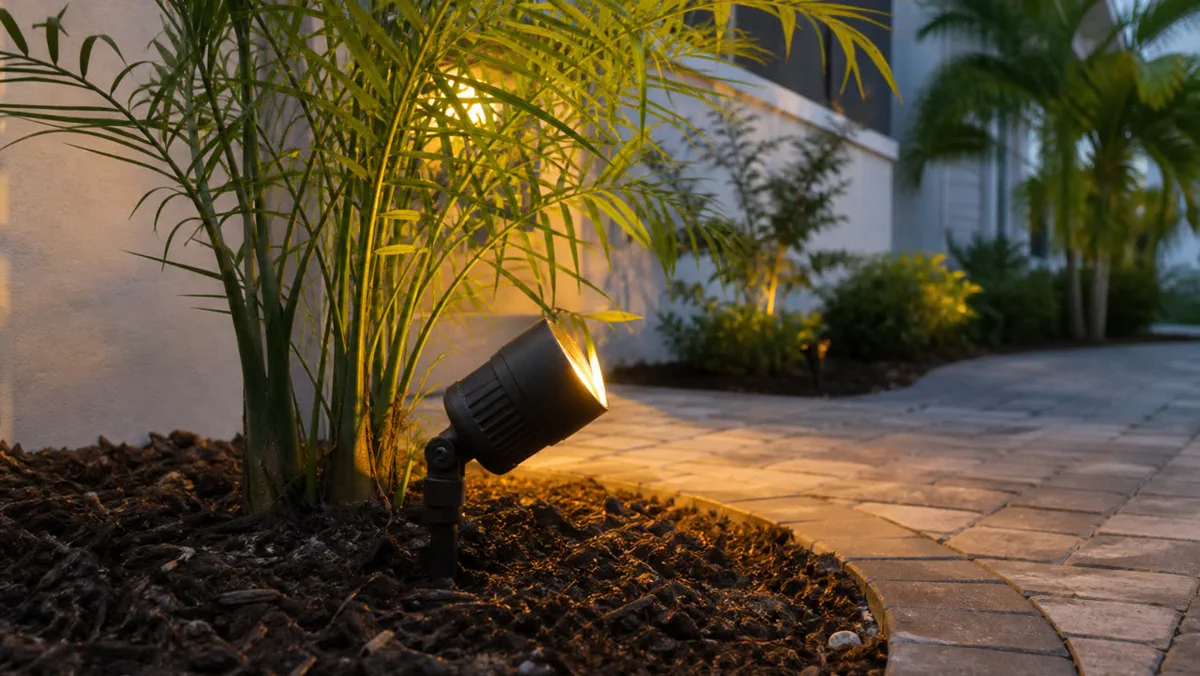
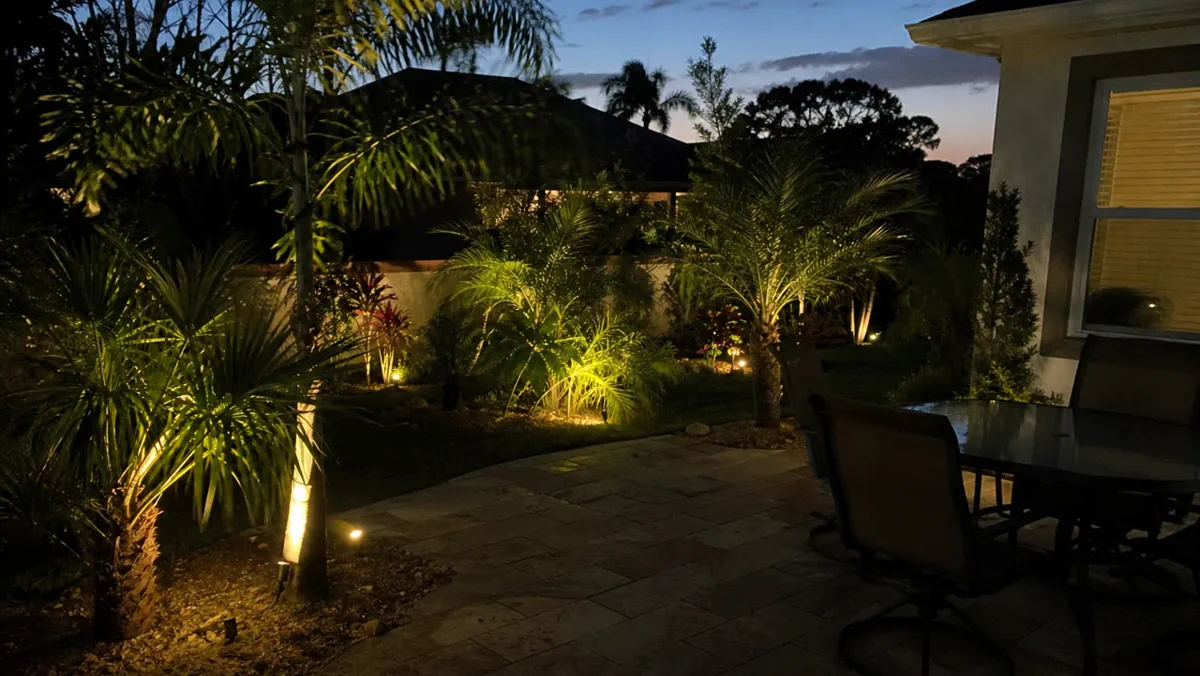
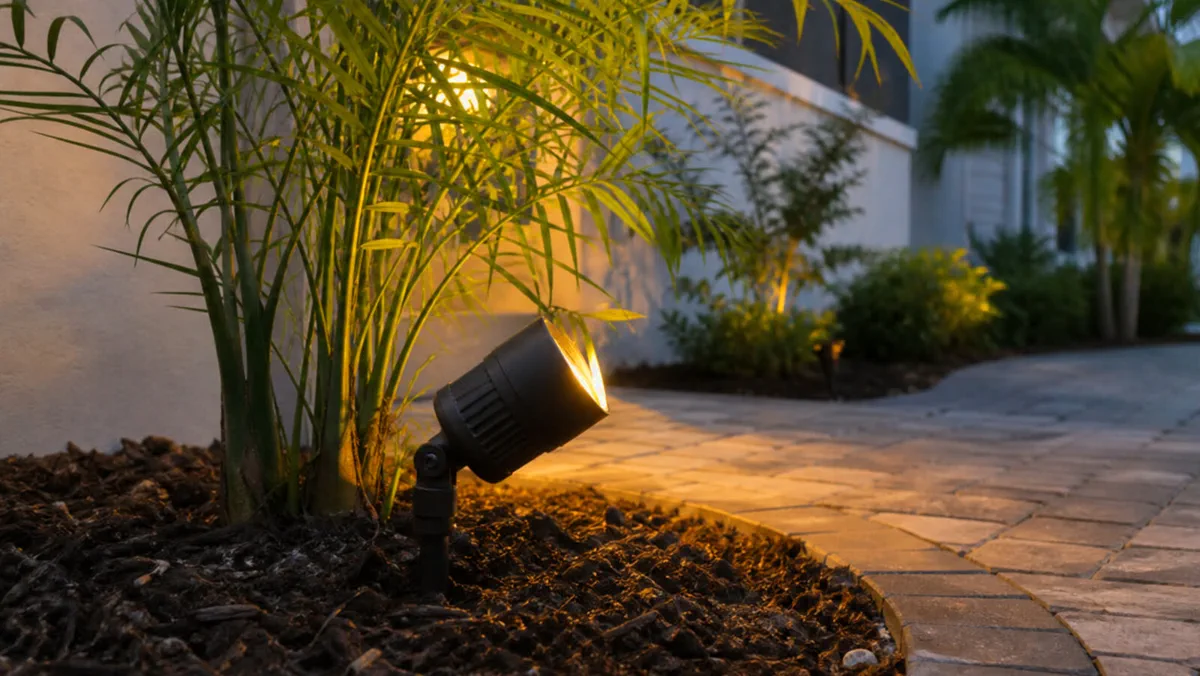
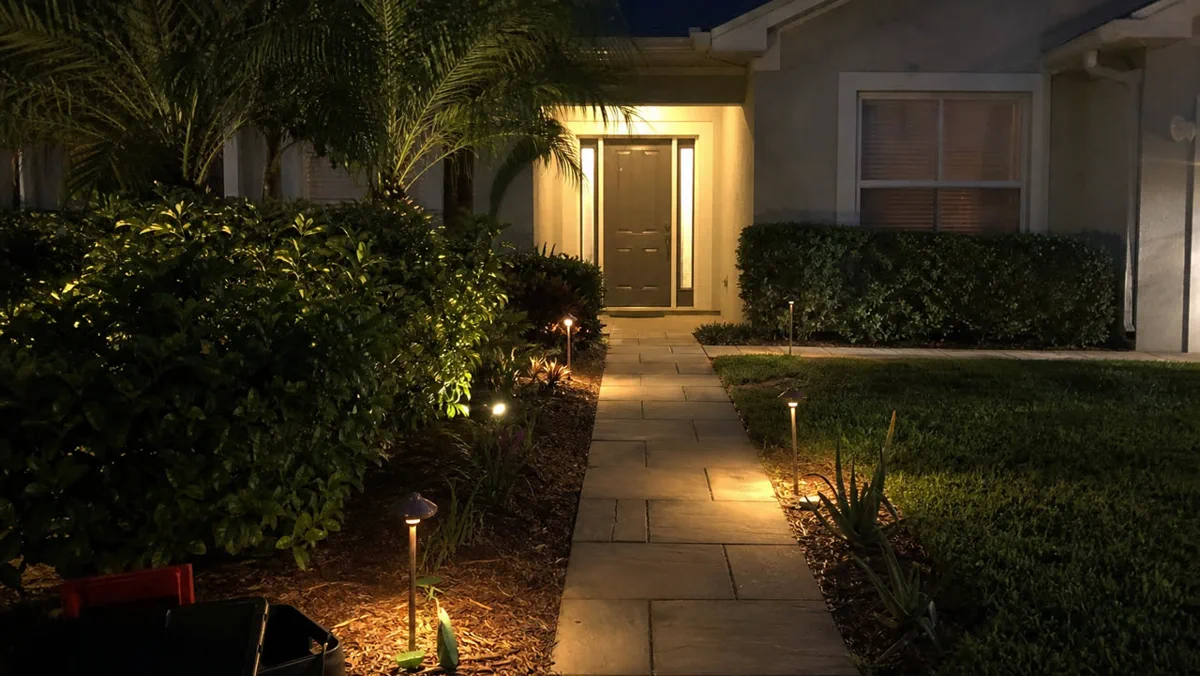
Landscape lighting is not just a fixture count. The right plan depends on what needs to be seen, what should stay subtle, and which coastal conditions can shorten fixture life. A palm uplight, pool-cage accent, front-entry wash, and pathway light all solve different problems, so placement matters as much as brightness.
Premium lighting starts with deciding what should be noticed first. A Sarasota front elevation may need soft wall grazing, a darker side yard may need low path lighting, and a lanai or pool edge may need safer movement without turning the seating area into a stage. The best result usually mixes a few fixture types instead of lining every border with the same light.
Warm color temperatures often feel better around stucco, stone, tropical planting, and outdoor seating. Cooler lamps can look stark against coastal landscaping unless there is a specific security or task-lighting reason. Fixture height, shield shape, beam angle, and spacing decide whether the final look feels calm or harsh.
If an existing system has dark zones, flicker, tripped timers, leaning fixtures, or lights that fail after heavy rain, the next step is usually diagnosis rather than replacing everything. Common checks include transformer settings, wire splices, photocell or timer programming, GFCI behavior, voltage drop, damaged lenses, corrosion, and plant growth covering fixtures.
For coastal homes, maintenance reviews should include connection protection, fixture material, drainage around low spots, and whether irrigation is soaking junctions. Those details help separate a simple lamp or timer correction from a system that needs rewiring, re-aiming, or more durable components.
Most Sarasota homes look better with warm lighting around entries, palms, oaks, stone, and pool patios because it feels softer and reduces glare. Cooler light may be useful for task or security areas, but it can make landscaping look flat if used everywhere.
Path lights should stagger, shield the lamp source, and point light onto the walking surface instead of straight into eyes. The goal is safe movement and gentle rhythm, not a row of identical bright dots.
Start with safety and arrival: front entry, address visibility, steps, path turns, driveway edges, and pool or lanai transitions. Accent lighting for palms, architecture, water features, and garden beds can then be layered so the yard has depth.
For most residential landscape systems, low-voltage LED fixtures are flexible and efficient. The important checks are transformer size, wire runs, voltage drop, and zoning so distant fixtures do not look weak or uneven.
Often yes, but the transformer, wiring, and fixture load should be checked first. A smart timer will not solve corroded splices, overloaded runs, or fixtures that are aimed poorly.
Coastal moisture and irrigation overspray can corrode bargain fixtures and exposed connections faster. Material, finish, gasket quality, drainage, and connection protection matter more near bays, beaches, and wet planting beds.
Lighting examples
These examples show common goals a homeowner may mention: safer paths, softer palm and wall accents, calmer pool or patio light, and repair clues such as dark zones or flicker.
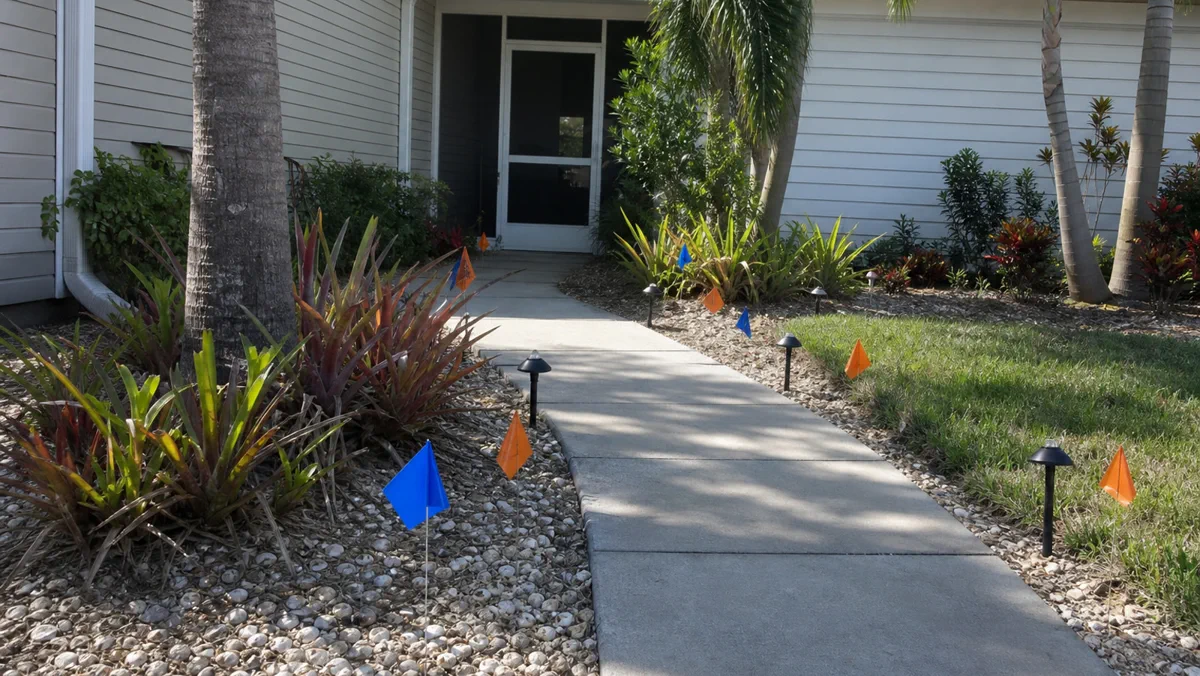
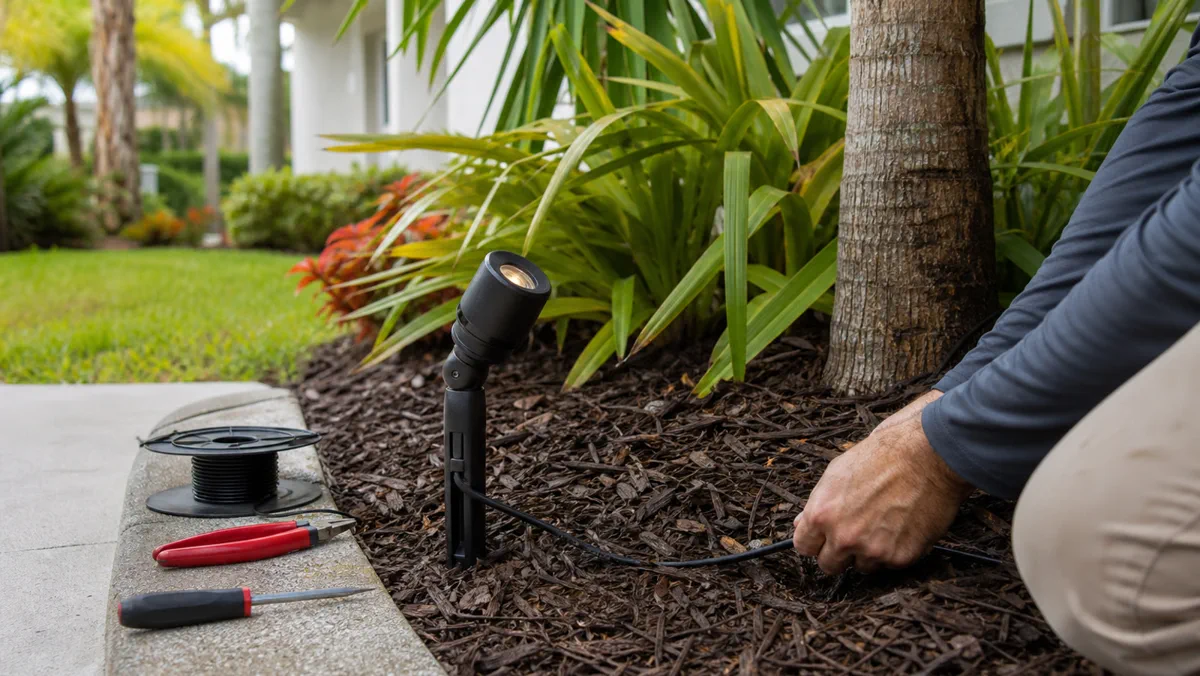
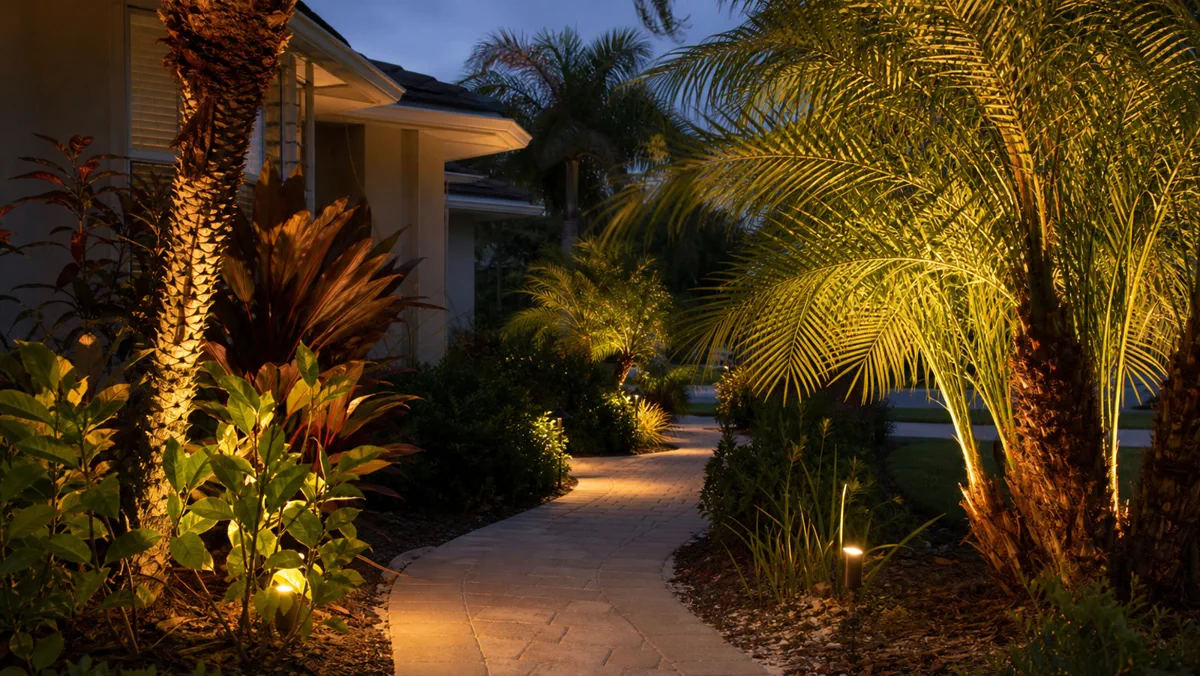
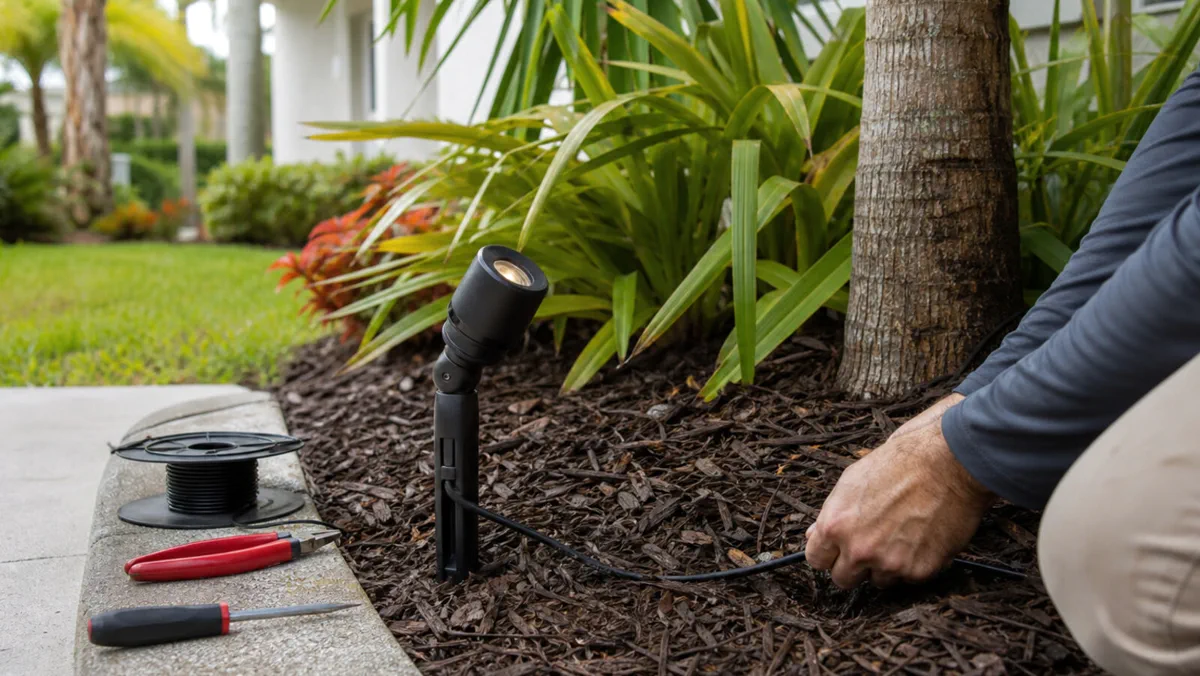
Sarasota and Bradenton properties bring coastal moisture, irrigation, palm and oak canopies, pool cages, pavers, HOAs, and salt-air fixture concerns.
A simple description of the area, the night-time concern, and the best way to reach you is enough to start.
Pricing, materials, warranty terms, licensing, insurance, and scheduling should be confirmed directly before approving installation or repair.