
Color temperature choices
Warm white usually feels better for palms, entries, stone, and outdoor seating than cool white. The exact temperature should match the property and existing fixtures.
LED conversion can make an older landscape lighting system more efficient and easier to maintain, but it should not be treated as a simple bulb swap every time. Sarasota-area systems may have old transformers, mixed fixture types, corroded sockets, voltage drop, or spacing that made sense for halogen but looks uneven with LED output.
A conversion review should confirm fixture condition, lamp compatibility, transformer load, color temperature, beam spread, dimming or control needs, and whether any fixtures should be repositioned. The goal is warmer, cleaner, more reliable light without creating glare or patchy coverage.
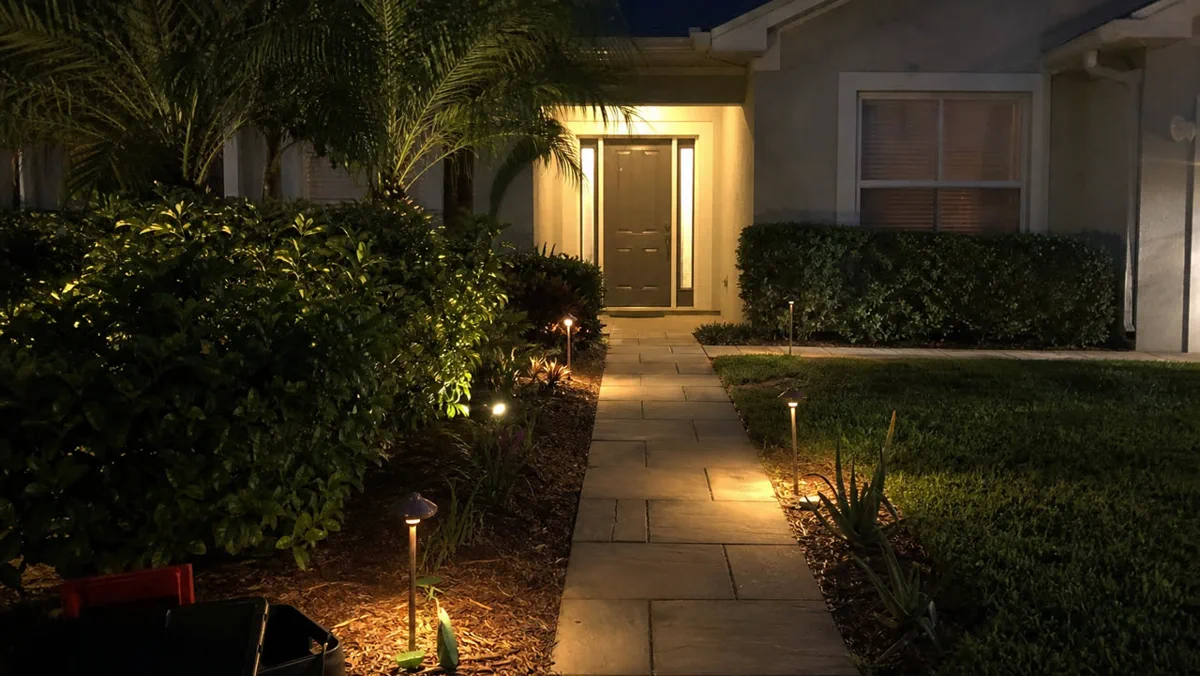
Describe the area and concern without gathering measurements first.
Final scope, products, warranty terms, licensing, insurance, timing, and price are confirmed directly before work begins.
Lighting should improve safety and evening use without harsh glare.
Warm white usually feels better for palms, entries, stone, and outdoor seating than cool white. The exact temperature should match the property and existing fixtures.
LEDs draw less power, but the transformer and wiring still need to be checked for safe, reliable operation.
Some old fixtures accept LED lamps well; others have sockets, lenses, or housings that make replacement the better long-term option.
These examples show the type of placement, fixture detail, and finished-lighting result that can be discussed during a callback. Actual products and scope are confirmed after property review.
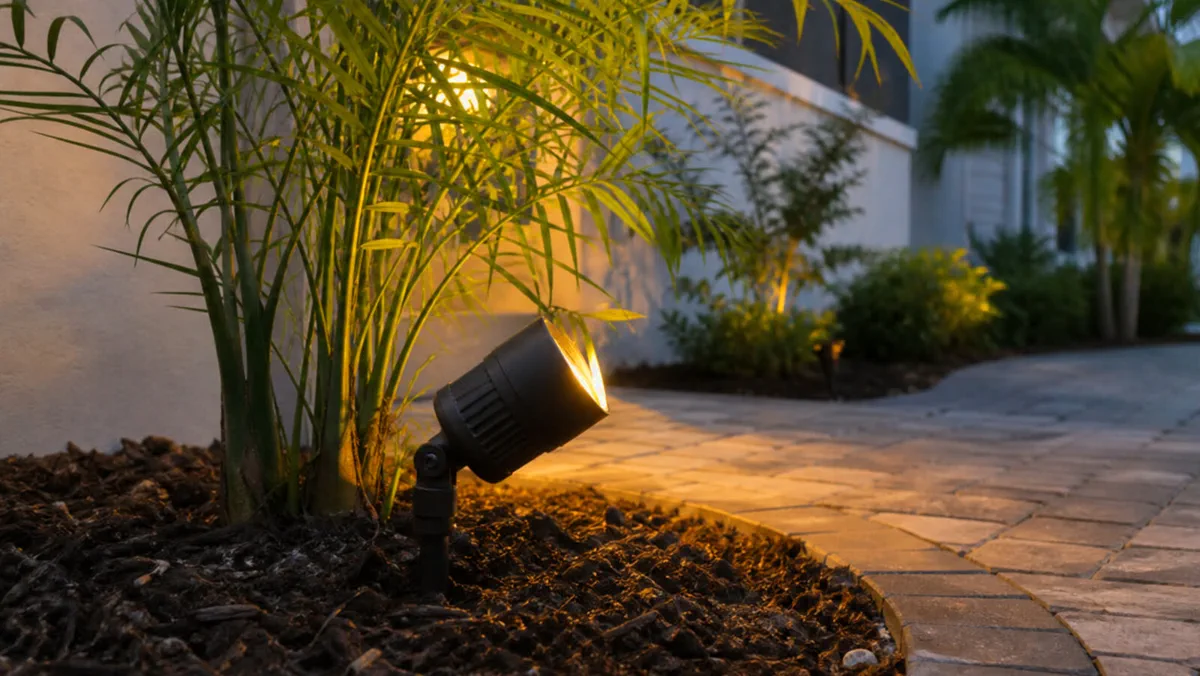
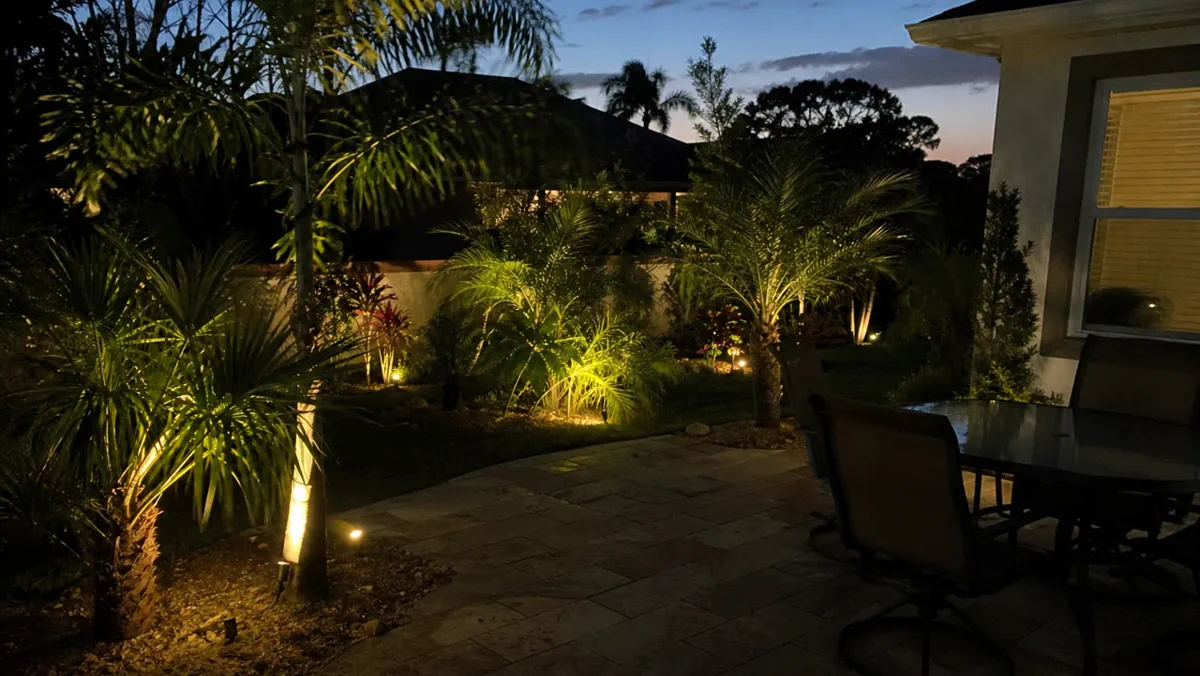
Many can, but compatibility depends on fixture condition, socket type, transformer, and the desired beam pattern.
It can, but brighter is not always better. The better goal is even, warm, controlled light with less maintenance.
Not always. The existing transformer should be checked for condition, load, controls, and compatibility.
Ask about lamp color, beam spread, fixture condition, transformer capacity, and whether repositioning is needed for a better result.
If the lighting is too dark, too harsh, unreliable, or outdated, send a short note about the area involved and the result you want. A lighting professional can help narrow the practical options and confirm the next step.